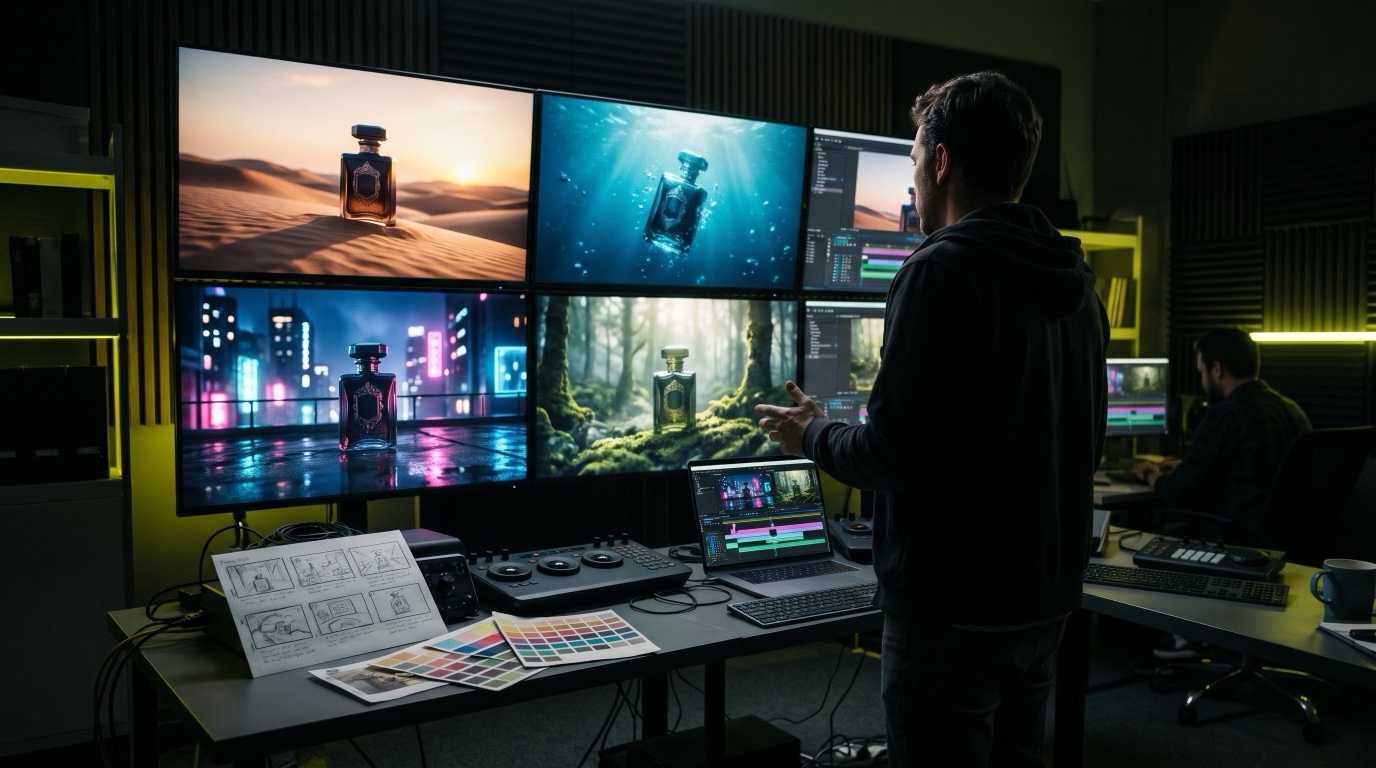
Making a commercial with AI is much more than generating a video from a short prompt. Behind the impressive examples you see on social media there is usually a solid brief, a clear script, consistent visual references and careful editing. In this article we walk through the steps an AI commercial goes through from idea to delivery, the most common mistakes, and when to bring in professional help. You can see how we run this process on our AI commercials page.
What an AI commercial is, and what it is not
An AI commercial is a commercial where some or all of the script, visuals, sound and editing are produced with AI tools. Text-to-video, image-to-video and audio models make it possible to build scenes without a set, try many versions of the same idea and create shots that would be too expensive to film.
But AI does not make a commercial on its own. Tools generate images; you decide what the brand wants to say, what the viewer should remember and where and how the film will be watched. That is why almost every successful project is run with classic production discipline.
Step by step: how to make a commercial with AI
1. Brief: goal, audience and channel
The film needs one main message. Are you launching a product, announcing a campaign or building awareness? Will it be watched without sound on Instagram Reels, or shown before a video on YouTube? These questions define length, format and what you show in the first three seconds. The points in our guide to writing a brief for a brand film apply to AI projects too.
2. Idea and script
AI makes the biggest difference with ideas that are hard to film: a product appearing in an impossible place, exaggerated scale, a realistic moment that never happened. Write the script scene by scene and describe each scene's length, camera movement and action in one sentence. This shot list becomes the roadmap for production.
3. Style references and visual language
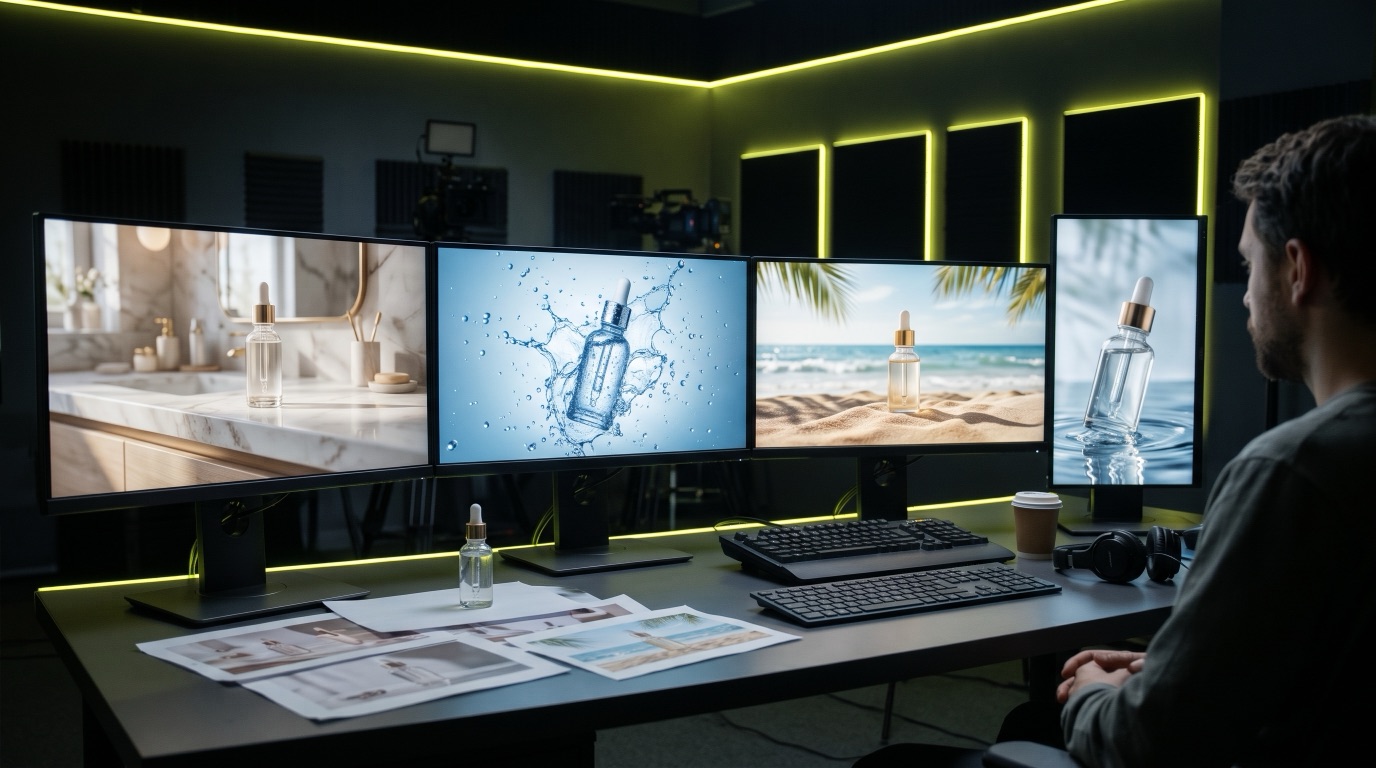
The most common problem in AI videos is color, light and characters changing between scenes. Prevent it with a style reference prepared before generation: color palette, lighting, lens feel, character looks and visual elements the brand never uses. Reuse this reference for every scene.
4. Product and character consistency
If your logo, packaging or product shape looks distorted, you lose trust. Prepare product photos from several angles. In scenes where detail is critical, filming the real product and placing it into the AI-generated environment is often the safest route. If a character appears in several scenes, create a character sheet.
5. Scene generation and selection
One attempt per scene is never enough. In professional projects many variations are generated for each scene and the one with the most consistent motion, light and detail is selected. This is where most of the work in AI production happens.
6. Sound, music and voice-over
However good the visuals, sound is one of the biggest factors in perceived quality. Voice-over, music and effects should follow the rhythm of the scenes, and commercial licenses for music and audio must always be checked.
7. Editing, color and formatting
Generated scenes are assembled in the edit, color-matched and finished with brand graphics. Finally the film is exported in the ratios and lengths each channel needs, such as vertical 9:16, square 1:1 and horizontal 16:9.
The most common mistakes
- Starting with the tool: clarify the message and script before choosing a tool.
- Inconsistent visual language: scenes generated without a style reference do not look like the same film.
- Distorted product details: always check logos, text and packaging in close-ups.
- Misleading scenes: using AI to show a product's real performance or results as proof damages trust.
- Neglecting sound: great visuals look ordinary with weak sound design.
Do it yourself or work with an agency?
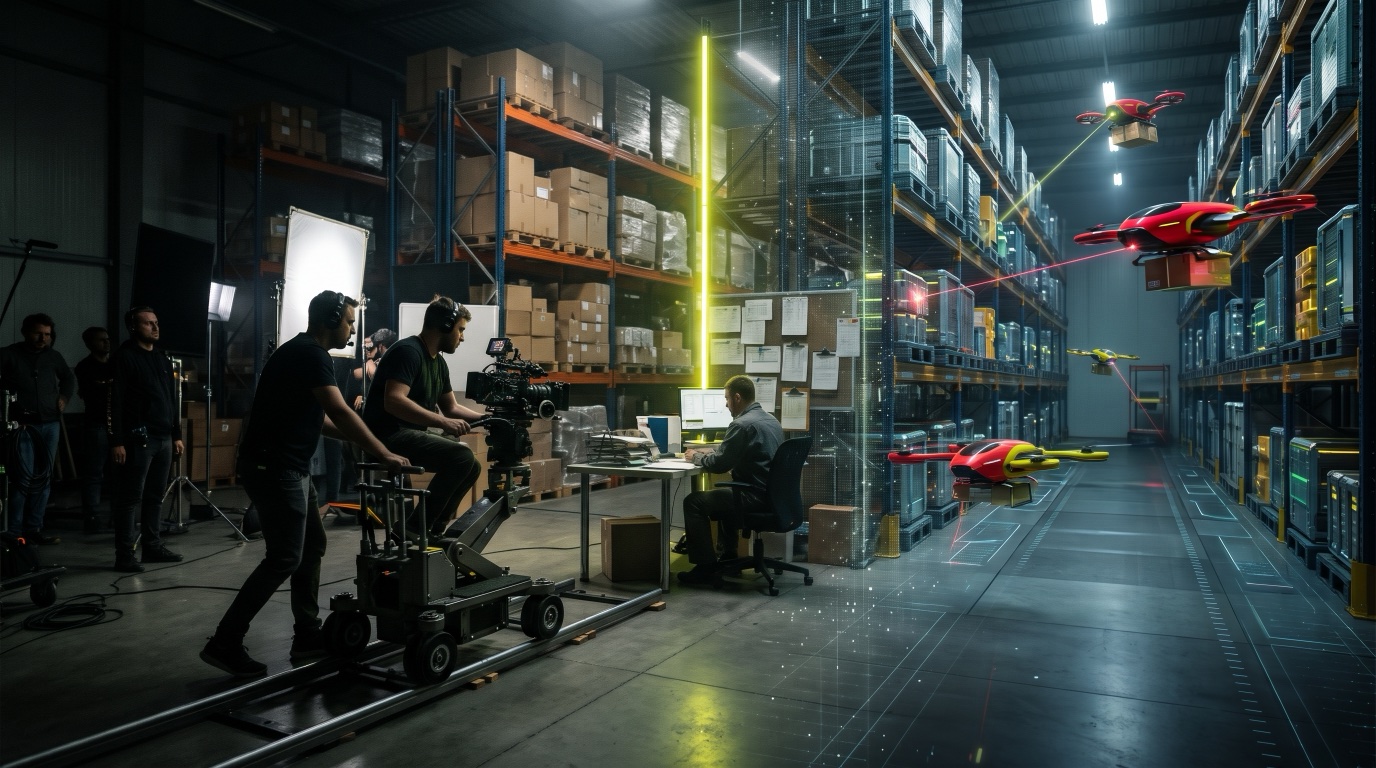
For a quick social media test or an internal presentation, off-the-shelf tools are enough. For films published in your brand's name, backed by ad spend or requiring an exact product look, an experienced team makes the difference in script, consistency, sound and editing. Hybrid projects that combine live-action and AI in particular require both production and AI expertise. We cover this in detail in AI or live-action?
Quick checklist
- Is the film's one-sentence message written down?
- Are the channels and formats defined?
- Are the shot list and durations ready?
- Are color, lighting and character references set?
- Who is responsible for checking product details?
- Are the usage rights for music, audio and visuals clear?
- Do you have consent from everyone whose face or voice is used?
If you are planning an AI commercial for your brand, see how we work on our AI video production page, or explore our commercial production service for the live-action side.